
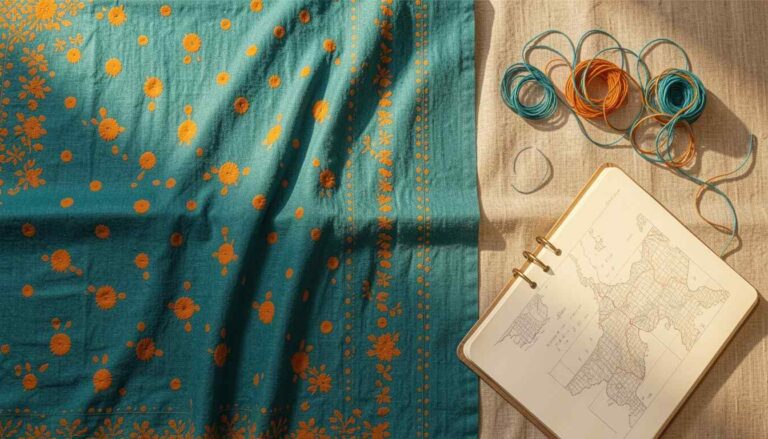
Gujarat is not one uniform state for chaniya choli. It is a rich patchwork of regional craft traditions, each producing chaniya cholis with different embroidery techniques, fabric choices, color identities, and silhouettes that have developed over centuries. Women across Kutch, Saurashtra, North Gujarat, Central Gujarat, and South Gujarat each carry a distinct visual identity in their festive wear, shaped by the artisan communities, natural resources, and cultural practices of their home regions.
Navratri has brought fresh national and international attention to Gujarati chaniya cholis in recent years, and with it, a growing interest among women who want outfits with genuine cultural depth rather than a generic festive look. Understanding regional styles helps you make a more informed and personally meaningful choice.
At Fashion Autograph, designer Naimisha Munshi draws on Gujarat’s full regional craft spectrum when creating custom chaniya cholis for her clients under the single label Fashion Autograph. Every piece reflects a real conversation about heritage, taste, and personal identity. This guide covers the most recognisable regional chaniya choli styles across Gujarat’s major districts so you can identify which tradition resonates most with your own roots and preferences.
Why Regional Chaniya Choli Traditions Still Matter Today
Regional craft traditions in Gujarat are living art forms, not museum pieces. Each tradition represents generations of skill passed through artisan communities who have refined their techniques across hundreds of years. The embroidery stitches, motif vocabulary, color combinations, and fabric preferences of each region are not random. They reflect the natural environment, the available materials, the community’s identity, and the occasions those garments were originally made for.
When you choose a chaniya choli that draws from a specific regional tradition, you wear something that carries genuine cultural weight. That matters to many women across Ahmedabad and Gujarat who see their festive wear as an expression of heritage, not just fashion.
For a deeper understanding of how chaniya choli traditions have developed across Gujarat over time, the article on the history and tradition of chaniya cholis in Gujarat gives a strong foundation. You can also read about local Gujarati artisans and motifs to watch this year for a current perspective on how these traditions are evolving.
Kutch: The Most Internationally Recognised Gujarati Style
Kutch embroidery is Gujarat’s most globally recognised textile tradition, and for good reason. The dense handwork, vibrant colors, and intricate mirror placements of Kutchi chaniya cholis are immediately distinct from any other regional style in India.
The defining element is sheesha bharat, the traditional Kutchi mirror work technique where small circular mirrors are stitched into the fabric using coloured thread frames forming geometric or floral patterns around each mirror. The overall effect is a surface that catches light dramatically and reads as deeply handcrafted from every angle.
Within Kutch, different artisan communities produce their own distinct embroidery substyles. Ahir embroidery uses chain stitch and satin stitch with bold floral and geometric motifs. Rabari embroidery features fine needlework with distinctive animal and community motifs. Mutwa embroidery uses extremely fine white thread on dark fabric to create intricate geometric patterns. Soof embroidery works with counted thread technique to create symmetrical geometric designs. Each of these traditions produces a different visual result even when all are described as Kutchi embroidery.
Kutchi chaniya cholis typically use cotton or cotton silk base fabrics with richly embroidered panels at the border, yoke, and blouse. Colors lean heavily toward deep jewel tones: deep red, navy, black, and forest green, with bright contrast thread work in yellow, orange, and white.
This style suits you if you love dense handwork, want a chaniya choli that tells a genuine craft story, and prefer the weight of a traditional identity over a contemporary look. To see how Kutchi embroidery compares with other handcraft options, the guide on mixing handcrafts: when to use zardosi, mirror work, or resham embroidery is worth reading alongside this one.
Saurashtra: Bold Colors And Authentic Bandhani
Saurashtra covers a broad region of western Gujarat including cities like Rajkot, Junagadh, Bhavnagar, and Jamnagar. Its chaniya choli identity is built on bold color, strong geometric craft traditions, and most importantly, authentic bandhani production.
Saurashtra is one of the primary centres for traditional bandhani in Gujarat. The tie-dye technique used here involves tying thousands of tiny fabric knots by hand before dyeing the cloth, creating distinctive dot patterns in bright contrasting colors. Bandhani chaniya cholis from Saurashtra have a depth of color and pattern density that machine-printed imitations simply cannot replicate.
Beyond bandhani, Saurashtra’s embroidery traditions include bold chain stitch and satin stitch work from Rabari and Ahir communities settled across the region. These traditions use brighter primary colors than Kutchi embroidery and tend toward bolder, more graphic motifs with strong outlines.
Saurashtra chaniya cholis typically use cotton and silk base fabrics with strong print or embroidery identity. Colors are unapologetically bright: deep red, bold yellow, and peacock blue with gold thread accents. The silhouette tends toward a slightly heavier construction than Central Gujarat styles.
This style suits you if you prefer bold, confident color and want the cultural weight of an authentic regional craft tradition. If you want to understand more about bandhani and other traditional Gujarati fabric techniques, the article on traditional Gujarati saree styles: bandhani, patola, and leheriya deep dive covers these traditions in detail.
North Gujarat: Patan Patola And Leheriya Influence
North Gujarat, particularly the Patan and Mehsana districts, brings a completely different textile identity to chaniya choli design. Where Kutch and Saurashtra prioritise embroidery, North Gujarat’s craft identity centres on extraordinary fabric surface treatment.
Patan Patola is one of India’s most technically demanding textile traditions. The double ikat weaving technique requires both warp and weft threads to be individually tie-dyed before weaving so the pattern appears perfectly on both sides of the finished cloth. Authentic Patan Patola fabric is extremely rare and expensive. However, its distinctive geometric patterns, including interlocking diamonds, parrots, elephants, and floral lattice motifs, are widely interpreted in printed chaniya choli fabrics across North Gujarat and Ahmedabad.
Leheriya is the other major fabric tradition associated with this region. The diagonal wave-dye technique creates flowing striped patterns in multiple colors across the cloth. Leheriya chaniya cholis and dupattas are festive staples in North Gujarat and have strong seasonal associations with the Navratri and wedding seasons.
Embroidery in North Gujarat chaniya cholis tends to be lighter and more refined than Kutch or Saurashtra, with more emphasis on the fabric surface itself rather than dense thread work. Colors are vibrant and multi-tonal, with the print or dye pattern doing most of the visual work.
This style suits you if you prefer print-forward chaniya cholis over heavy embroidery, and if you feel a connection to North Gujarat’s exceptional textile heritage. For more on how unique fabric choices are influencing current chaniya choli design, read chaniya cholis with unique fabrics: what’s trending.
Central Gujarat: Ahmedabad’s Urban Craft Fusion
Ahmedabad and the surrounding Central Gujarat region represent the most culturally layered chaniya choli identity in the state. As Gujarat’s commercial and cultural capital, Ahmedabad has historically been the meeting point for craft traditions from across the state. Kutchi artisans, Saurashtra bandhani producers, North Gujarat fabric weavers, and South Gujarat textile manufacturers all supply into Ahmedabad’s market.
The result is a chaniya choli aesthetic that borrows intelligently from all these traditions while adding contemporary design thinking. An Ahmedabad chaniya choli might use a Kutchi mirror work border on a Patola-print georgette skirt, or pair a bandhani dupatta with a raw silk skirt featuring zardosi embroidery. The combinations are more flexible and design-led than in strongly regional centres.
Gold zardosi and heavy festive embroidery have become a significant part of Ahmedabad’s chaniya choli identity, driven partly by the city’s large bridal wear market. Contemporary Ahmedabad designers like Naimisha Munshi at Fashion Autograph interpret regional craft traditions through modern silhouettes, precise fit, and embroidery placement decisions that work for today’s women rather than following fixed traditional templates.
Fabric choices in Ahmedabad chaniya cholis are diverse: georgette, raw silk, cotton silk, and tissue sit alongside bandhani, Patola print, and Kutchi embroidery elements depending on the design direction. Colors are more flexible and seasonally responsive than strictly regional styles.
This style suits you if you want the depth of Gujarati craft tradition with the flexibility of modern design, contemporary fit, and a look that reflects your individual taste rather than a community identity. To see how traditional and contemporary Gujarati design approaches are being balanced today, the article on chaniya cholis: traditional Gujarati vs modern designs gives a useful comparison. You can also explore modern marvels of chaniya choli designs for today’s confident women for current design inspiration.
South Gujarat: Surat’s Textile Heritage And Decorative Opulence
South Gujarat, centred around Surat, brings a textile identity shaped by centuries of position as India’s most important fabric manufacturing hub. Surat has historically produced vast quantities of silk, synthetic, and woven fabrics for markets across India, and this manufacturing heritage influences the chaniya choli aesthetic of the region.
South Gujarat chaniya cholis tend to use richly textured, heavily woven fabrics with a preference for opulent surface decoration. Gota patti ribbon work is a defining embellishment tradition in this region. Woven metallic ribbon strips are applied to fabric in geometric and floral patterns to create a richly layered, formally festive appearance.
Embroidery in South Gujarat chaniya cholis tends to be more opulent and formal than in other regions. Heavy metallic thread work, stone setting, and rich surface treatment create outfits that read as premium and ceremonial rather than folk or traditional. This suits wedding functions, sangeet nights, and high-end Garba mandap events.
Colors lean toward deep formal tones: burgundy, royal blue, and emerald green, heavily complemented by gold embellishment and metallic fabric texture. The overall weight and construction is heavier than other regional styles.
This style suits you if you prefer a more formal, opulent chaniya choli aesthetic with richly worked surfaces and a premium festive presence. For more on fabric choices that align with this style preference, the article on the best fabrics for designer chaniya cholis is a helpful companion.
Tribal And Folk Traditions: Garasia, Bhil, And Adivasi Chaniya Choli
Gujarat’s tribal communities across the Aravalli hills, Panchmahals, and eastern districts carry their own distinct chaniya choli traditions that sit entirely apart from the craft-centre and urban styles discussed above.
Tribal chaniya cholis use cotton base fabrics, natural and chemical dyes in strong primary colors, and simple but highly distinctive embroidery stitches that encode community identity through motif choice. Birds, trees, animals, suns, and community symbols appear across these garments in ways that communicate belonging and cultural identity to those who understand the visual language.
These folk traditions are increasingly influencing contemporary fashion designers who incorporate tribal motifs and natural dye color palettes into modern chaniya choli designs for women who want a distinctly rooted Gujarati identity in their festive wear. If you are drawn to folk motifs and earthy natural colors, this influence is worth exploring with your designer.
How Regional Styles Are Influencing Modern Chaniya Choli Design In 2026
Contemporary Ahmedabad designers do not work in isolation from these regional traditions. They actively draw from Kutchi mirror work, Saurashtra bandhani, North Gujarat leheriya, South Gujarat gota patti, and folk motif traditions to create chaniya cholis that feel genuinely rooted in Gujarati culture while fitting modern taste, body proportions, and event requirements.
At Fashion Autograph, Naimisha approaches this with the same design philosophy she applies to every garment. She understands the source material, respects its cultural context, and then interprets it through contemporary construction, precise fit, and considered embroidery placement. The result is a chaniya choli that wears its heritage without feeling like a costume.
For a current view of how these traditions are showing up in 2026 designs, the articles on chaniya cholis trends you need to know for 2026 and Navratri 2026 color predictions and chaniya choli trends give useful context.
Finding Your Regional Style: A Simple Guide
If you are still unsure which regional tradition speaks most to you, use these quick reference points:
- You love dense hand embroidery and intricate mirror work: Kutchi style is your natural match.
- You are drawn to bold color and authentic tie-dye fabric: Saurashtra bandhani is your identity.
- You prefer fabric surface pattern over embroidery: North Gujarat Patola or Leheriya suits your taste.
- You want traditional craft depth with modern design flexibility: Ahmedabad Central Gujarat style gives you exactly that.
- You prefer formally opulent, richly embellished festive wear: South Gujarat Surat style is your direction.
- You are drawn to folk motifs, natural colors, and community identity: Tribal tradition influence is where your chaniya choli story begins.
These preferences can also guide your conversations about color, fabric, and embroidery during your design consultation. The guides on how to choose the right chaniya cholis for different body shapes and how to choose the right colors for your chaniya cholis help you apply your regional preference to your specific body type and skin tone.
How Fashion Autograph Incorporates Regional Gujarati Traditions
Naimisha can incorporate any of these regional traditions into your custom chaniya choli at Fashion Autograph. Whether you want authentic Kutchi mirror work placement, a bandhani fabric base, a leheriya printed dupatta, Patola-inspired geometric motifs, gota patti border work, or a folk-influenced embroidery approach, she designs it with personal attention and full understanding of where each tradition comes from.
Every piece is created under the Fashion Autograph label with Naimisha’s direct design input. You bring your regional preference and personal taste to the consultation, and she translates it into a chaniya choli that fits your body, suits your events, and reflects your cultural identity honestly.
You can explore her work across different styles in the Fashion Autograph work gallery and browse the designer chaniya choli collection in Ahmedabad for inspiration. When you are ready to discuss your own regional style preference and design brief, use the Fashion Autograph contact page to schedule your consultation with Naimisha.


