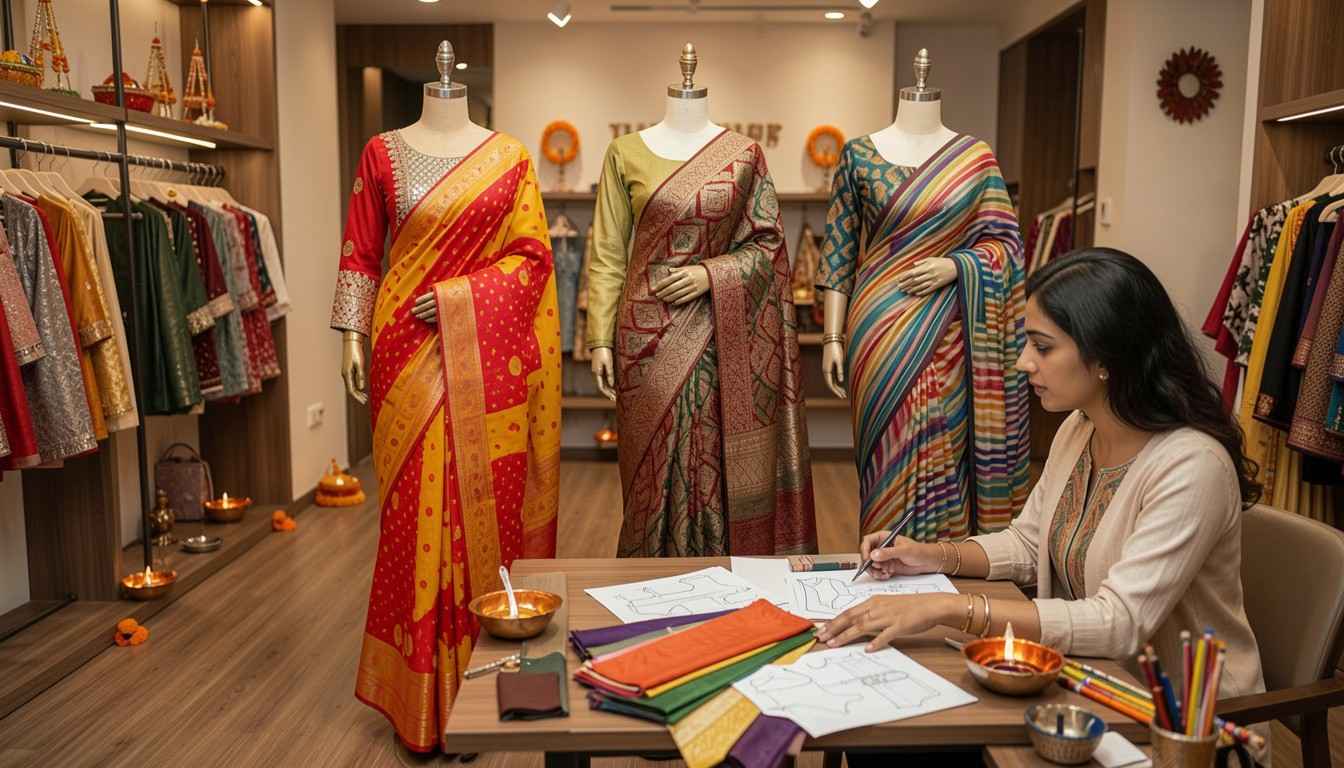
A vintage saree carries more than fabric; it carries memories. It might be your mother’s first wedding outfit, your grandmother’s festive favorite, or a family heirloom passed through generations. At Fashion Autograph, we help you give these treasured sarees a new life by converting them into modern Indo-Western outfits. This allows you to honor your heritage while embracing contemporary fashion.
If you have ever wondered how a traditional saree can become a chic crop top and skirt set, or a flowing gown, you are in the right place. Here, we guide you through the process and show why remaking heirloom sarees can be both practical and stylish.
Understanding Your Vintage Saree
Before you start designing, it is essential to understand your saree’s characteristics.
- Fabric Type: Some fabrics, like silk and chiffon, are delicate, while cotton and linen are easier to manipulate.
- Embroidery and Motifs: Heavy zari, mirror work, or thread embroidery can be preserved as statement elements.
- Sentimental Value: Identifying which parts of the saree hold emotional significance helps decide what to retain.
By evaluating these details, you can plan an outfit that respects the original while making it wearable in a modern context. For inspiration, you can also explore our Indo-Western dresses for every occasion collection to understand how contemporary designs adapt traditional textiles.
Choosing the Right Indo-Western Style
Not every vintage saree is suitable for the same style. Fashion Autograph offers options to match your saree’s personality:
- Long Skirts with Crop Tops: Perfect for silk or embroidered sarees, retaining the pallu as a draped accent.
- Gowns or Dresses: Flowing sarees work well when converted into floor-length gowns.
- Dhoti Pants with Tunics: Lightweight sarees suit casual yet festive Indo-Western wear.
Selecting the style depends on your comfort, occasion, and the saree’s design. If you are unsure which style to pick, our top 5 Indo-Western outfits for fusion fashion lovers guide can help you visualize possibilities.
Design Process at Fashion Autograph
At Fashion Autograph, every conversion starts with a consultation. Naimisha Munshi, the sole designer, evaluates your saree and sketches designs that retain the essence of the original fabric.
- Step 1: Consultation: Discuss your vision, event, and which parts of the saree are most important.
- Step 2: Sketching: Naimisha creates a custom design, ensuring the embroidery and colors are highlighted.
- Step 3: Fabric Addition: Sometimes, complementary fabrics are added to balance structure or comfort.
Our custom workflows explain the journey from sketch to final outfit, showing the precision and care in each creation.
Preserving Saree Elements While Modernizing
One of the key principles is to keep what makes the saree unique:
- Pallu as a Drape or Cape: Use it creatively as a shoulder drape or attached cape for drama.
- Borders as Hemlines: Zari or embroidered borders can define skirts, tunics, or gowns.
- Motifs as Statement Panels: Small floral or geometric motifs can become central panels on tops or dresses.
This approach ensures your outfit feels modern but continues to tell your family’s story. For more guidance, see our article on blending traditional and modern with Indo-Western wear.
Fabric Handling and Tailoring Techniques
Vintage sarees often require gentle handling. The fabric may be fragile, prone to tearing or stretching. Fashion Autograph tailors use careful stitching methods, including:
- Reinforced seams without heavy alteration of embroidery.
- Soft linings to prevent irritation or damage.
- Adjustable fittings to accommodate body shape without stressing the fabric.
These techniques ensure your outfit remains durable while honoring the saree’s original quality.
Styling Your Remade Outfit
Once the saree becomes an Indo-Western outfit, styling matters:
- Accessories: Minimal jewelry works best when the fabric is heavy or embroidered.
- Footwear: Neutral-toned heels or embroidered flats complement the outfit.
- Occasions: From festive gatherings to weddings, these outfits offer versatility.
You can find additional ideas on pairing and styling in our Indo-Western collection and work gallery.
Benefits of Remaking Heirloom Sarees
- Sustainability: You reuse fabric that might otherwise sit unused.
- Personal Value: Wearing your family’s history connects you to your roots.
- Modern Versatility: A saree converted into a crop top and skirt can be worn for multiple events.
You retain the essence of the past while making your wardrobe more functional and fashionable.
Real-Life Examples
Fashion Autograph has successfully converted numerous heirloom sarees into modern outfits. For instance:
- Silk Saree to Flowing Gown: The pallu was used as a cape, and the borders accentuated the hemline.
- Embroidered Saree to Skirt and Crop Top Set: Motifs were repositioned to maintain visual balance while adding a contemporary twist.
See more examples in our work gallery.
Conclusion
Remaking heirloom sarees allows you to honor tradition and embrace modern fashion simultaneously. At Fashion Autograph, we focus on preserving what makes your saree unique while creating an outfit that fits today’s lifestyle.
If you have a vintage saree you want to give a second life, reach out to us through our contact page to schedule a consultation with Naimisha Munshi. Your heirloom deserves to be worn, cherished, and admired again.