
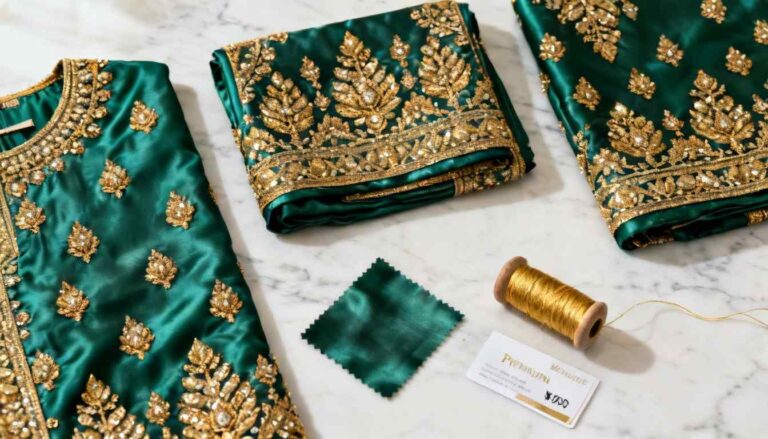
Salwar kameez pricing in Ahmedabad ranges from a few hundred rupees at a fast fashion outlet to several lakhs at a premium designer boutique. Most women genuinely do not know what that price difference is paying for. The garment looks broadly similar from a distance. Both have a kameez, a salwar, and a dupatta. So why does one cost ₹800 and another cost ₹25,000?
The answer is that a salwar kameez is not a single product. It is a combination of several independent cost components that each scale significantly with quality level. Understanding what those components are and how each one affects the price helps you evaluate any quote you receive with real confidence. At Fashion Autograph in Ahmedabad, designer Naimisha Munshi builds every salwar kameez personally under the single label Fashion Autograph with full transparency about what goes into the cost at each stage.
This guide breaks down every cost component inside a salwar kameez so you can assess pricing clearly before you commit.
Why Salwar Kameez Pricing Varies So Widely
The salwar kameez price varies widely because it involves multiple cost components that are genuinely independent of each other. A plain cotton straight-cut salwar kameez with no embellishment and no fitting process costs a fraction of what a chanderi Anarkali with dense resham hand embroidery, two trial fittings, and a custom dupatta costs. Both are salwar kameez. The components inside them are completely different.
The five major cost components are fabric, embellishment and embroidery, construction quality and complexity, design input and customisation, and the fitting process. Each of these scales across a very wide range. Understanding each one separately helps you decode what any price quote is actually representing.
The guide on what makes a designer salwar kameez stand out gives useful context on the design and quality differences between standard and designer salwar kameez, which connects directly to the pricing differences this article covers.
Cost Component One: Fabric
Fabric is the largest single variable in salwar kameez pricing. It affects how the garment looks, how it wears, and how long it lasts. Three broad quality tiers determine most of the fabric cost difference.
At the entry level, polyester, synthetic georgette, and low-grade cotton blends give an acceptable initial appearance at the lowest possible fabric cost. These fabrics may pill, fade, or lose their drape after a season or two of wear and washing.
At the mid-range, good quality cotton, cotton silk, modal, linen, and better-grade georgette breathe and drape well. They hold their colour and structure across repeated wear and laundering. Most well-priced boutique salwar kameez in the ₹3,000 to ₹9,000 range use fabrics in this tier.
At the premium level, pure silk, raw silk, chanderi, high-grade organza, and tissue carry significantly higher per-metre costs. They hold embroidery beautifully, drape with natural elegance, and maintain their quality across many years of use and professional dry cleaning.
One important note: the dupatta fabric is a separate cost from the kameez and salwar material. Many price quotes only include the kameez and salwar and price the dupatta separately. Always confirm whether the quoted price includes all three pieces. The article on how to choose the best fabric for salwar kameez gives a deeper breakdown of fabric types and what each one delivers in practical terms.
Cost Component Two: Embellishment And Embroidery
Embellishment and embroidery account for the largest single price jump in a salwar kameez beyond the fabric cost. This component alone can multiply the garment price by three to five times, depending on the type and density of the work.
A plain salwar kameez with no embellishment is priced entirely on fabric and construction. As embellishment is added, the cost increases based on what type it is and how densely it is applied.
Block print, screen print, and digital print add visual complexity at a relatively modest cost. Print quality varies significantly with the investment level and the resolution of the colour work.
Machine embroidery uses computer-driven thread work on fabric. It is less expensive than hand embroidery and produces repetitive patterns that lack the variation of hand work.
Resham or silk thread hand embroidery is skilled artisan work where each element is placed and worked by hand. Dense hand embroidery adds cost in direct proportion to the artisan hours invested. This is genuinely difficult to fake convincingly because the quality of hand embroidery reads differently in person compared to machine work.
Zardosi or metallic thread embroidery uses gold or silver metallic threads and adds significant cost because both the material and the skilled labour time are more expensive than resham.
Sequin, bead, mirror work, and gota patti each carry their own material and application costs depending on the density and placement across the garment. For context on how these handcraft types compare in cost and visual effect, the article on mixing handcrafts: when to use zardosi, mirror work, or resham embroidery is a useful reference.
Cost Component Three: Construction Quality And Complexity
Construction quality is the component most buyers cannot evaluate simply by looking at the front of a garment on a hanger. It differentiates a salwar kameez that lasts two seasons from one that remains in excellent condition after many years.
The number of fabric panels in the kameez cut affects labour time. A garment with more panels has more complex construction and more stitching points. Each additional panel represents additional cutting and joining time.
Lining adds cost but significantly improves how the garment drapes, how embroidery sits against the body, and how the fabric feels against the skin. An unlined kameez costs less to produce but delivers a noticeably different wearing experience.
Seam finishing quality determines how long a garment holds together under repeated wear and washing. French seams, proper overlock finishing, and clean flat seams take more time than basic finishing but extend the garment’s structural life meaningfully.
Silhouette complexity changes construction time significantly. A straight-cut salwar kameez is simpler to produce than an Anarkali, a lehenga-style set, a jacket-style suit, or a sharara combination. Each additional complexity in the cut adds labour time and therefore cost.
Internal structure including neckline interfacing, internal taping, and how the zipper or closure is finished all affect how the garment holds its shape over time. These details are invisible from the outside but very visible in how the garment wears after six months.
Cost Component Four: Design Input And Customisation
The design process carries a cost that is often not separated out in a final price but is present nonetheless.
A salwar kameez made from a standard block pattern costs less than one where the silhouette, neckline, sleeve, and panel arrangement are designed from scratch for the client. Standard patterns are applied quickly and require minimal creative decision-making. Custom design requires time, expertise, and personal attention that adds to the total cost.
Personalisation of the neckline depth, sleeve style, kameez length, and dupatta styling based on your specific body and occasion also requires additional design time and construction adjustments.
Occasion-specific design, where the garment is created to suit a particular function such as a wedding, a corporate event, or a festive celebration, requires design thinking that a generic ready-made piece does not include. This design input directly affects the outcome quality.
At Fashion Autograph, every salwar kameez is designed personally by Naimisha from the client brief. No generic pattern is applied. This design process is built into every garment she creates under the Fashion Autograph label. You can explore her salwar kameez work on the designer salwar kameez page and see the range of occasion types and silhouettes her design process covers.
Cost Component Five: Fitting And Alteration Process
Fitting is a cost component that most buyers overlook entirely when comparing salwar kameez prices, but it directly determines how well the finished garment actually fits your body.
Ready-made salwar kameez and most standard tailoring orders include no fitting process. The garment is made to a size chart or to a measurement set and delivered without a trial. Any fit issues that emerge after delivery are the buyer’s problem to resolve separately.
A single measurement session with delivery is an improvement over size-based ordering but does not catch posture-related fit issues, armhole comfort problems, or neckline positioning that only become apparent when you wear the garment in person.
One trial fitting with adjustments allows you to test the garment and identify issues before the final stitching is completed. This is the standard for most mid-range custom orders.
Two or more trial fittings progressively refine the garment until every fit point is confirmed. This is the standard for premium custom work and designer boutique orders, and it produces a significantly more reliable fit outcome.
Whether the boutique provides alteration support after delivery is also a real value component of any price. The article on alterations 101: what changes are reasonable after your final fitting helps you understand what the fitting process should deliver and what kinds of adjustments are typically needed.
Budget Level Breakdown: What You Get At Each Price Point In Ahmedabad
Entry Level: Up To ₹1,500 To ₹3,000
This range covers ready-made or standard tailor-stitched salwar kameez in synthetic or low-grade cotton fabric. Construction is basic, no trial fitting is included, and embellishment is minimal or machine-based. Appropriate for casual daily wear or one-time functions where the outfit does not need to withstand repeated use.
Mid-Range: ₹4,000 To ₹9,000
Better fabric quality in cotton silk, modal, or good-grade georgette. A more considered silhouette and neckline. Some hand embroidery or quality printed fabric. One measurement session with delivery. Appropriate for family functions, office festive wear, and semi-formal occasions.
Upper Mid-Range: ₹10,000 To ₹18,000
Good to premium fabric including chanderi, silk blend, or high-grade georgette. Moderate to substantial hand embroidery or detailed design work. One to two fitting sessions. Better lining and seam finishing. Appropriate for wedding functions as a guest, festive occasions, and formal events where the outfit needs to hold up to scrutiny and photography.
Premium: ₹19,000 And Above
Pure silk, raw silk, or high-grade specialty fabric. Dense hand embroidery including zardosi or resham. A unique or complex silhouette designed for the specific client. Multiple fitting sessions. Premium finishing inside and out. The garment is designed specifically for your body and your occasion, not adapted from a standard template. Appropriate for close family roles at weddings and premium festive events where the outfit is extensively photographed.
For reference on how this pricing logic applies to other garment categories, the guide on the ultimate guide to salwar kameez for weddings covers which investment level suits which specific wedding function role.
How To Evaluate A Salwar Kameez Quote
When you receive a quote for a salwar kameez, ask these specific questions before agreeing:
Ask what fabric is included and request a swatch to touch and examine. Fabric quality is immediately apparent when you hold it.
Ask whether the embroidery is hand or machine done. A skilled tailor or boutique will answer this directly and without hesitation.
Ask how many fitting sessions are included. A clear answer tells you what level of fit outcome to expect.
Ask to see the inside of a sample garment so you can judge the seam finishing and lining quality.
Ask whether the dupatta is included in the quote or priced separately.
Ask whether the boutique supports alterations after delivery and whether this is included or charged additionally.
For a broader framework on evaluating design and production quality before you commit, the article on how to read a couture invoice: materials, labour, and why it costs what it does is directly relevant to this evaluation process.
What Is Included In A Custom Salwar Kameez At Fashion Autograph
At Fashion Autograph, every salwar kameez starts with a personal design consultation where Naimisha discusses your occasion, your body type, your style preferences, and the specific look you want. She takes measurements personally. Fabric is selected or sourced for the specific garment rather than pulled from generic stock.
The silhouette, neckline, sleeve, and embellishment approach are designed specifically for you, not adapted from a standard template. Trial fittings are standard in the production process. Construction finishing inside and out meets the Fashion Autograph quality level that Naimisha maintains across all her garments. Every salwar kameez she creates carries the Fashion Autograph label and reflects her direct design input.
You can explore finished salwar kameez work in the Fashion Autograph work gallery to see the range of occasions, silhouettes, and fabric choices her design process covers. For styling inspiration, the article on salwar kameez design inspirations for your next festive look shows how different design approaches translate into finished looks for specific occasions.
To discuss your specific salwar kameez brief and budget with Naimisha, use the Fashion Autograph contact page to arrange your consultation.
Quick FAQ: Salwar Kameez Pricing
How much should I spend on a salwar kameez for a wedding function?
For a wedding guest role, the upper mid-range between ₹10,000 and ₹18,000 typically delivers the fabric quality, embellishment level, and fit that a formal wedding function warrants. For close family roles, the premium range is appropriate.
Is a designer salwar kameez worth more than a tailored one?
Yes, when the designer provides original design input, custom fabric selection, multiple fitting sessions, and premium construction alongside the stitching. A tailor stitches to your measurements. A designer like Naimisha designs the complete garment from your brief and manages the entire production process with personal involvement.
Why does the same fabric cost more at a boutique than at a fabric shop?
A fabric shop sells raw fabric at bulk or retail rates. A designer boutique sources fabric for a specific garment with quality verification and design suitability in mind, and the fabric cost is incorporated into the total garment price alongside design, labour, and fitting.
What is the difference in price between a straight-cut salwar and an Anarkali or sharara?
An Anarkali or sharara involves significantly more fabric and more complex construction than a straight-cut salwar kameez. Both of these factors add directly to the garment cost. The difference can range from ₹3,000 to ₹8,000 or more depending on the silhouette complexity and the fabric used.
Does the price usually include the dupatta?
Not always. Many tailors and boutiques price the dupatta separately from the kameez and salwar. Always confirm this when you receive a quote.
How do I know if the embroidery on my salwar kameez is hand done?
Hand embroidery has natural variation in stitch tension, spacing, and direction that machine embroidery does not replicate. Looking closely at the back of the embroidery panel also shows the difference: hand embroidery has irregular backing thread patterns while machine embroidery has a very uniform bobbin thread pattern on the reverse.


