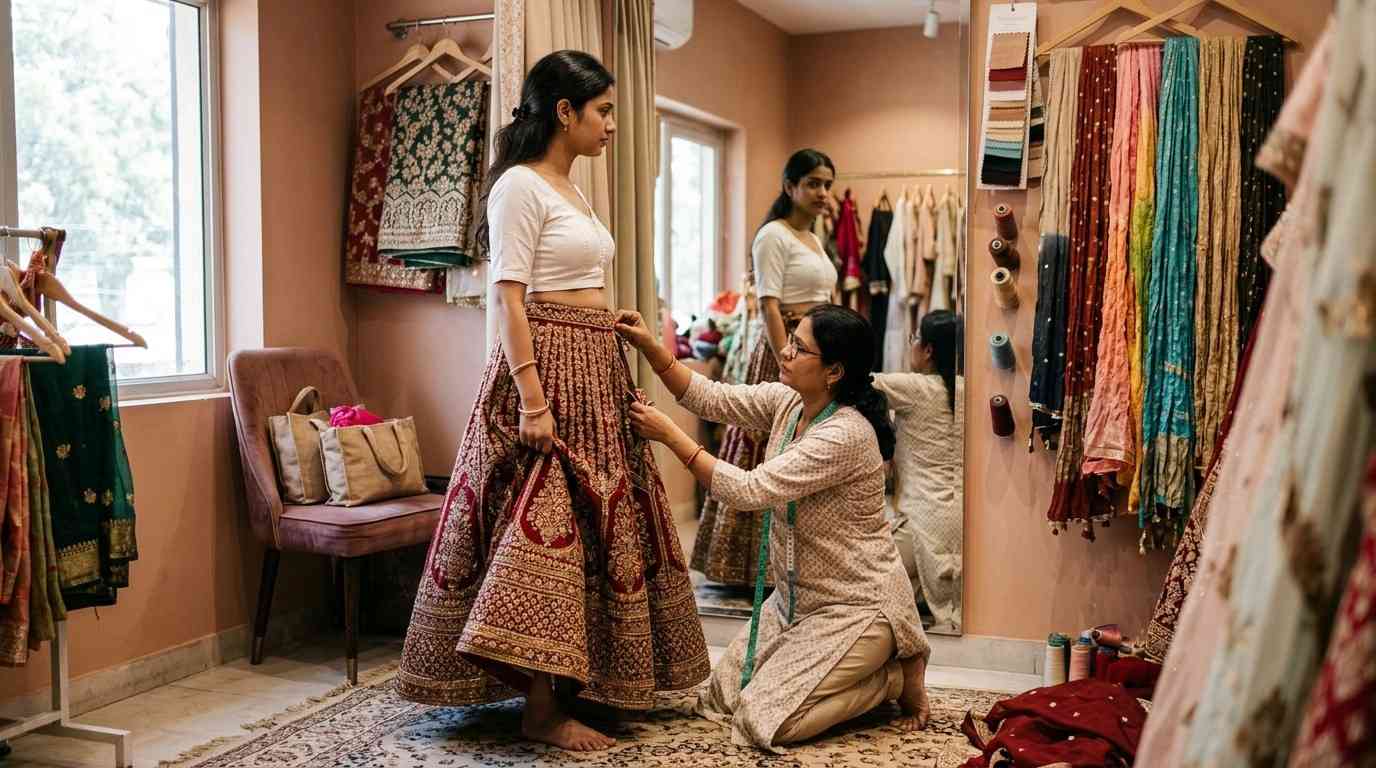
The salwar is the most overlooked piece in a salwar kameez set. Most women spend time choosing the kameez design, the embroidery, and the dupatta, and then treat the salwar as a default. Whatever comes with the set is what they wear. But the salwar silhouette you choose determines how your legs look, how your hips read, how the complete outfit flows, and how comfortably you move through an event that might last several hours.
A beautiful kameez can look visually imbalanced when paired with a salwar that is the wrong width or length for the body underneath it. Getting the salwar right changes the entire look. At Fashion Autograph in Ahmedabad, designer Naimisha Munshi considers the salwar silhouette alongside the kameez from the very beginning of every design conversation. Every salwar kameez is created personally by Naimisha under the single label Fashion Autograph, with fit, proportion, and body type as active design considerations.
This guide covers every major salwar style, which body types each flatters, and how to customise the fit so your complete salwar kameez set works for your proportions rather than against them.
Why The Salwar Silhouette Matters As Much As The Kameez
The salwar creates the lower half of your visual silhouette. It determines the proportional balance of the complete outfit from the waist downward. Different salwar styles draw the eye differently across the hip, thigh, and ankle, and create very different visual impressions of the same body.
Additionally, the salwar must be practically comfortable for whatever the event involves. A salwar that looks beautiful when you are standing still may feel restrictive when you sit down for three hours at a wedding, or may bunch awkwardly when you dance at a sangeet. Both aesthetics and practicality need to be considered together.
Custom salwar construction at Fashion Autograph allows waist, hip, thigh, and length measurements to all be taken independently. This produces a fit that standard ready-made options, which use fixed size charts with predictable ratios between measurements, simply cannot achieve. For a broader look at what sets custom salwar kameez apart, the article on what makes a designer salwar kameez stand out covers the full picture.
Understanding The Main Salwar Styles
Before looking at body type recommendations, it helps to understand what each salwar style actually looks like.
A straight-cut salwar maintains consistent width from hip to ankle with a clean, unfussy silhouette. A churidar fits through the thigh and calf and gathers in bunched rings at the ankle. A Patiala salwar is very wide and deeply pleated, gathering both at the waist and ankle to create significant volume. A dhoti salwar uses asymmetrically draped fabric with a dhoti fold at the front, falling loosely through the leg. A palazzo is wide-legged, flowing, and straight from hip to hem. A sharara fits at the waist and hip and flares dramatically from below the knee to the hem. A parallel or straight palazzo is consistently straight-legged with no taper and no flare. A cigarette or slim-fit salwar is narrow and close-fitting through the thigh and calf, tapering close to the ankle.
Pear-Shaped Body: Wider Hips And Narrower Shoulders
For a pear-shaped frame where the hips are noticeably wider than the shoulders, the goal is to balance the silhouette rather than draw more attention to the widest hip point.
A straight-cut salwar, palazzo, or parallel salwar works well here. These styles distribute the visual weight across the full leg rather than concentrating it at the hip. The eye travels continuously down the length of the leg rather than stopping at the widest point.
A churidar or cigarette salwar fits closely through the thigh and calf. For a pear-shaped frame with fuller hips and thighs, these styles can feel constricting and may look tight rather than intentionally fitted.
For customisation, request extra hip ease in the straight-cut salwar so the fabric falls cleanly from the hip rather than pulling across it. Ensure the palazzo has a generous hem sweep so the leg reads as gracefully wide rather than just heavy at the top.
Apple-Shaped Body: Fuller Mid-Section With Slimmer Legs
For an apple-shaped frame where the mid-section is the widest point and the legs are relatively slimmer, the goal is to avoid adding volume at the waist and hip while creating a clean, flowing leg line.
A straight-cut salwar, parallel salwar, or dhoti salwar works well for this frame. These styles do not gather at the waist or hip, which keeps the transition from the kameez to the salwar visually clean. A dhoti drape with a front fold can create visual interest below the waistline without adding bulk at the mid-section.
A Patiala salwar adds significant volume at the waist and hip through its deep pleats. For an apple-shaped frame, this additional volume can make the mid-section appear wider rather than balanced.
For customisation, request a slightly lower rise in the salwar waistband so the garment sits below the widest mid-section point. An elasticated or draw-string waistband is significantly more comfortable than a fitted waistband for this frame type over a long event.
Hourglass Body: Balanced Shoulders And Hips With A Defined Waist
For an hourglass frame where shoulders and hips are roughly balanced and the waist is clearly defined, most salwar styles are workable. A churidar, cigarette salwar, or sharara works particularly well because an hourglass frame can comfortably wear close-fitting styles that show the leg line without the fit feeling disproportionate.
The churidar and cigarette salwar show the natural leg definition of a well-proportioned body. The sharara works beautifully because the dramatic flare below the knee creates an elegant extension of the naturally curved silhouette above it.
Very wide palazzo and Patiala styles in very voluminous versions can visually obscure the natural waist definition that is one of the most flattering features of an hourglass frame.
For customisation, ensure the churidar or cigarette salwar has enough ease at the thigh to remain comfortable over the full event duration without creating visible pulling or tightness when seated. The visual goal is fitted, not tight.
Petite Frame: Shorter Stature
For a petite frame, the goal is to create the longest possible visual leg line from waist to hem without horizontal visual interruption.
A straight-cut salwar, churidar, or cigarette salwar all work well here. These styles allow the eye to travel the full length of the leg without stopping. The churidar gathering at the ankle adds a traditional detail without creating a horizontal visual break in the middle of the leg.
Wide or voluminous styles like a full palazzo or a dramatic sharara can visually interrupt the leg length. A very wide flare at the knee reads as a horizontal line that visually shortens the leg above it.
Salwar length is particularly important for petite frames. A salwar even slightly too long pools at the ankle and makes the leg appear shorter. Request the salwar to be hemmed precisely to your standing height with the footwear you plan to wear at the event. This single customisation detail makes a very visible difference.
For guidance on how body type considerations apply across other garments too, the article on how to choose the right kurtis for different body types follows the same approach for kurti silhouettes and is worth reading alongside this guide.
Tall Frame: Above Average Height
For a taller frame, more voluminous and dramatic salwar styles become available in a way that would visually overwhelm a shorter frame.
A palazzo, sharara, Patiala, or dhoti salwar all work well for taller frames. Volume and drama in the salwar read as intentional and balanced on a taller body. A sharara with a long, wide flare below the knee looks elegant rather than excessive when the wearer has the height to carry the full length comfortably.
A very narrow cigarette or slim-fit salwar on a tall frame can look proportionally unbalanced if the kameez is short. The very long narrow leg creates a visual contrast with a short kameez that reads as disproportionate rather than elegant.
For customisation, ensure the palazzo or sharara hem falls to the correct full length. Styles that are too short look proportionally incorrect on taller frames. Ankle or floor-length hem lines work best.
Rectangular Body: Similar Shoulder, Waist, And Hip Width
For a rectangular frame where the shoulder, waist, and hip widths are similar, the goal is to add visual definition and movement to the lower body.
A Patiala, palazzo, or dhoti salwar works well here. These styles add visual volume and flow to the lower body, creating the appearance of hip definition and waist contrast. The volume at the leg draws the eye outward and suggests a curvier silhouette.
A straight-cut or cigarette salwar on a rectangular frame can accentuate the evenness of the proportions without adding the visual interest that more voluminous styles create.
For customisation, a Patiala salwar with a slightly higher, clearly defined waistband creates visual waist definition that complements the silhouette. Request the pleats to be evenly distributed from the front for the most flattering result.
How Salwar Length Affects Your Silhouette
Beyond the salwar style, the hem length is a customisation detail that significantly affects how the complete outfit reads.
A full ankle-length salwar creates the longest visual leg line and suits most body types across most occasions. A capri or three-quarter length salwar can work well for petite frames when styled with heels but can visually shorten the leg when worn flat. Floor-length or slightly grazing the floor suits formal occasions and flowing styles like palazzo and sharara.
The most important factor here is the heel height you plan to wear. A salwar hemmed correctly for flat feet will pool badly when heels are added. Conversely, a salwar hemmed for heels will appear too short when you stand barefoot or in flat shoes. Always specify your planned footwear heel height at the time of measurement so the hem is set correctly for how you will actually wear the garment at the event.
Waist And Hip Fit: Why Standard Sizing Fails Consistently
The waist and hip area of a salwar is where standard ready-made sizing falls short most consistently. The distance between the natural waist and the hip point varies significantly between individuals and directly affects where the salwar needs to sit to look and feel correct.
A salwar waistband that sits even slightly above or below its correct position on your body looks and feels wrong from the very first wear. The garment either rides up or slides down and requires constant readjustment throughout the event.
Elasticated, draw-string, and fitted waistbands each have different comfort and aesthetic qualities for different body types. Naimisha discusses waistband style alongside body frame and occasion at every Fashion Autograph consultation. She takes waist, hip, and thigh measurements independently to ensure the salwar sits exactly where it should on your specific body.
For guidance on measuring correctly before a custom consultation, the article on blouse sizing: how to measure correctly for a perfect fit covers measurement principles that apply equally to salwar construction.
Fabric And How It Affects Salwar Style Performance
The fabric you choose for the salwar affects how each style behaves during the event.
A churidar requires a fabric with drape and softness, such as cotton silk or good-grade georgette, so it bunches cleanly at the ankle in even rings rather than puckering awkwardly.
A palazzo works best in lightweight flowing fabrics like chiffon, georgette, or soft cotton that allow the wide leg to move fluidly as you walk. A stiff fabric in a palazzo reads as bulky rather than flowing.
A sharara benefits from fabrics with body and weight that hold the flare shape below the knee, such as raw silk or heavier georgette. A very lightweight fabric in a sharara does not hold the flare structure and collapses during movement.
A Patiala salwar works well in cotton, cotton silk, or soft georgette where the pleats gather naturally and fall evenly. The fabric needs to be soft enough to pleat cleanly without creating bulk.
For a complete fabric comparison guide relevant to your salwar kameez decisions, the article on how to choose the best fabric for salwar kameez covers each fabric type and how it performs across different styles and occasions.
How Fashion Autograph Customises Salwar Fit
At Fashion Autograph, Naimisha considers body type and proportions from the very beginning of every salwar kameez design conversation. She discusses your frame, your preferences for how fitted or relaxed you want the salwar to feel, and the specific occasion the outfit is intended for before making any style recommendation.
She takes all waist, hip, thigh, and length measurements personally rather than using a generic size chart. She plans the salwar silhouette alongside the kameez design to ensure the complete outfit creates a balanced, proportional result rather than treating the kameez and salwar as two separate problems.
Trial fittings confirm that the salwar sits correctly at the waist, moves comfortably through the thigh, and falls to exactly the right hem length before final delivery. Any fit issue identified at a fitting is corrected before you take the garment home.
You can explore finished salwar kameez work from Fashion Autograph across different styles, occasions, and body types in the work gallery. To browse the full salwar kameez range and approach, visit the designer salwar kameez page. To discuss your specific body type, occasion, and style preferences with Naimisha, use the Fashion Autograph contact page to arrange your consultation.
If you are also planning other garments for the same occasion, the guides on salwar kameez design inspirations for your next festive look and the ultimate guide to salwar kameez for weddings give additional context on how different styles suit different event types.
Quick FAQ: Salwar Fit By Body Type
Which salwar style is most flattering for wider hips?
A straight-cut salwar, palazzo, or parallel salwar works best for wider hips. These styles distribute visual attention across the full leg rather than concentrating it at the widest hip point. Avoid churidar and cigarette salwar if your hips and thighs feel tight in close-fitting styles.
Can a petite woman wear palazzo salwar?
Yes, but with important customisation. The hem length must be precisely set for the heel height you plan to wear. A palazzo that is even slightly too long visually shortens the leg significantly on a petite frame. A well-hemmed palazzo in a flowing fabric can work beautifully for a petite woman at festive occasions.
What is the most comfortable salwar style for a long event?
A straight-cut salwar or parallel salwar is the most consistently comfortable across long events because neither style gathers at the waist nor restricts the thigh during seated or active wear. A dhoti salwar is also comfortable for extended wear when the drape is correctly set.
How do I choose a salwar style for a wedding as a guest?
Choose based on your body type first, then your formality preference. A straight-cut salwar in a premium fabric suits most formal wedding functions for most body types. A sharara or Anarkali-style flare works well for wedding ceremonies and receptions where a more dramatic silhouette is appropriate.
What is the difference between palazzo and straight-cut salwar?
A palazzo is wide-legged with a generous, flowing hem sweep. A straight-cut salwar is consistently proportioned from hip to ankle without the additional width of a palazzo. A palazzo creates more visual volume and movement. A straight-cut reads as cleaner and more structured.
How does heel height affect salwar length?
Heel height changes your standing height and therefore where the salwar hem appears relative to your ankle and floor. A salwar hemmed for flat footwear will pool at the ankle when heels are added.