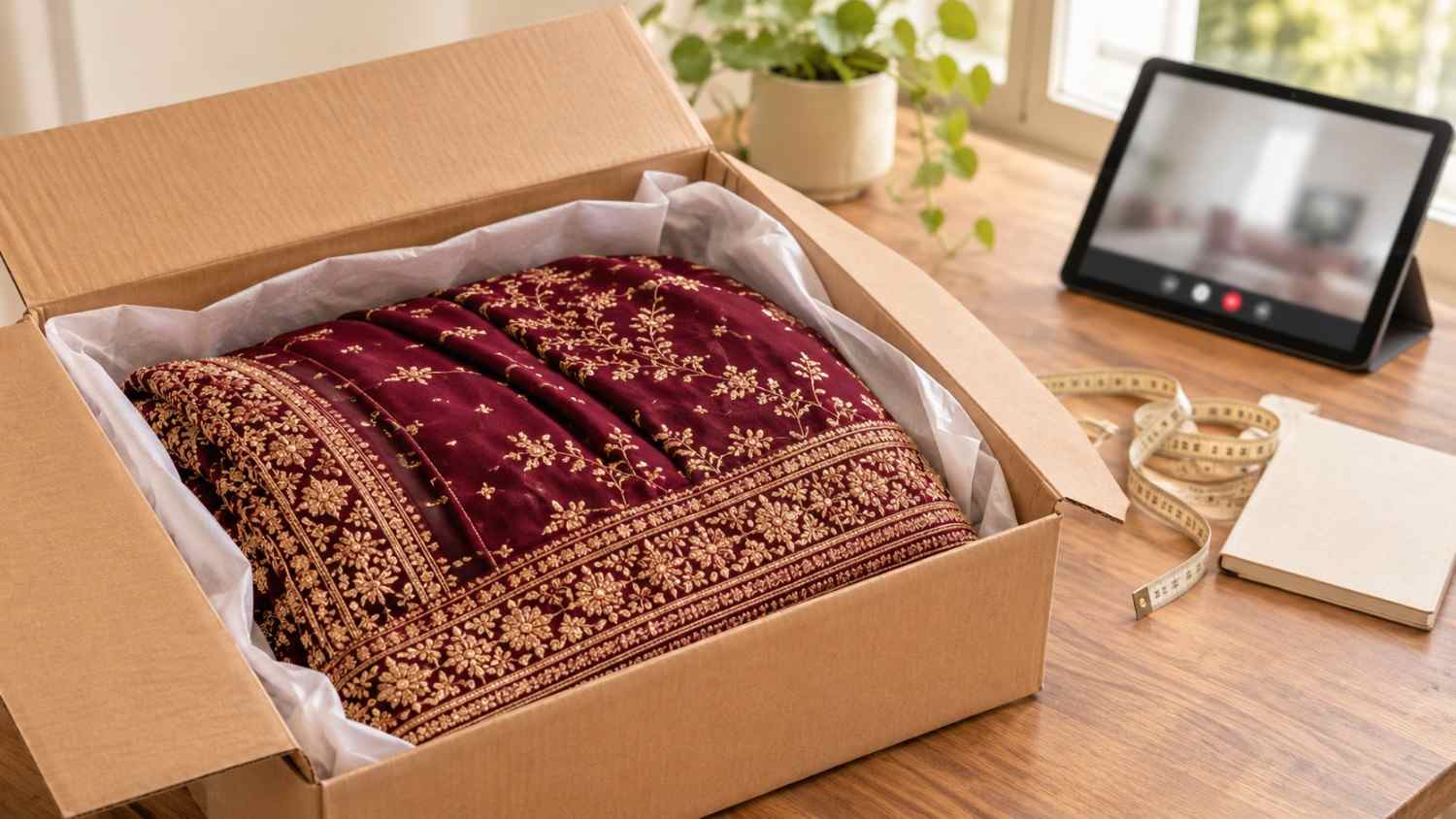
Plan three outfits, not one. Wear something secure and traditional for Lakshmi Puja, something comfortable and dignified for the Bestu Varas family visits, and something more festive for the evenings. Each setting asks something different of your clothes. Puja means sitting on the floor near open flame. Visiting means bending for blessings and moving between homes. Evenings are where you can take risks with shine.
This guide is about women’s outfits. Diwali is on Sunday 8 November this year, so if you are reading this in the first week of November, much of the plan below is still doable with ready-to-wear pieces, an outfit you already own, or a new blouse. A full custom outfit from scratch usually is not.
Quick answer: what to wear when
| Occasion | What works | What to avoid |
|---|---|---|
| Lakshmi Puja (Sun 8 Nov evening) | A firmly pleated, pinned saree, a well-fitted salwar kameez, or a chaniya choli with a simple blouse and a fitted dupatta | Long trailing dupattas, wide flowing sleeves, anything needing constant adjustment |
| Bestu Varas visits (Tue 10 Nov, see the date note) | A fresh outfit: a Gujarati-drape saree, a well-fitted suit, or a re-styled chaniya choli | Necklines and blouses that gape when you bend; very heavy skirts for a full day |
| Evenings | An Indo-Western set, sharara, lighter lehenga, or a saree with a statement blouse | Heavy embellishment you can’t sit in; loose layers near diyas or sparklers |
The festival week at a glance
| Date (2026) | What happens |
|---|---|
| Fri 6 Nov | Dhanteras: shopping and small rituals, so choose comfort |
| Sun 8 Nov | Diwali / Lakshmi Puja. Ahmedabad muhurat roughly 6:22 PM to 8:20 PM; confirm with your family’s pandit or panchang |
| Mon 9 Nov | Govardhan Puja / Annakut |
| Tue 10 Nov | Bestu Varas, the Gujarati New Year. Greeted with “Saal Mubarak” |
| Wed 11 Nov | Bhai Bij (some calendars show 10 Nov) |
Why you will see two dates for the New Year. Pratipada, the tithi that marks Bestu Varas, begins at 12:31 PM on 9 November and ends around 2:00 PM on 10 November, per Drik Panchang’s Ahmedabad page. Some calendars therefore show Monday 9 and others Tuesday 10. Drik notes that Govardhan Puja can fall a day before the New Year when Pratipada starts mid-day, and it lists Govardhan Puja on 9 November this year. That points to Tuesday 10. If your family follows a particular day, go with it. Have your New Year outfit ready by Monday evening and you are covered either way.
One outfit won’t do: what each setting asks of you
Outfit lists sort clothes by style. It is more useful to sort by what the setting demands of the person wearing them.
| Puja | Family visits | Evening | |
|---|---|---|---|
| Posture | Floor sitting, standing to pray | Standing, bending for blessings, sofas | Sitting, standing, maybe dancing |
| Footwear | Off | On and off at each door | Usually on |
| Open flame | Yes: diyas, incense | Sometimes: diyas at the entrance | Possible: candles, sparklers |
| Priority | Security and tradition | Comfort and ease of movement | Presence |
Choose each outfit for the hardest moment of its setting. A skirt that swings beautifully but catches under your feet as you rise from the floor is the wrong puja outfit, however good it looks.
What to wear for Lakshmi Puja
Puja favours calm, secure clothing. The Ahmedabad muhurat is roughly 6:22 PM to 8:20 PM, so dress and do a quick test before sunset. Sit cross-legged for a few minutes, rise without using your hands, and bend forward as if lighting a diya.
Options that work:
- A saree, pleated and tucked firmly, with the pallu pinned at the shoulder. It is a classic choice if you are comfortable in a saree for a few hours.
- A well-fitted salwar kameez or kurta set. Easier to sit in than most sarees, and practical if you are hosting. The salwar kameez collection shows cuts that sit comfortably.
- A chaniya choli with a simpler blouse and a dupatta pinned across the body. A lighter, moderately flared skirt is easier to sit in than a very full one.
Details that matter more than the outfit type:
- Sleeves. Fitted or three-quarter sleeves are safer than wide, flowing ones near diyas.
- Neckline and back. The neckline should stay put when you lean forward. The guide to how a blouse is fitted so it holds explains what to check.
- Dupatta. Some families cover the head during puja. If yours does, use a lighter dupatta and pin it.
- Footwear. Slip-ons you can remove easily.
What to wear on Bestu Varas
Bestu Varas is the Gujarati New Year, and it is an occasion in its own right. Gujarat’s holiday list, as reported, shows Tuesday 10 November as New Year’s Day, with Bhai Bij on the 11th. It is traditionally a day for new clothes, visits to elders for blessings, and often temple visits and Annakut. How strictly this is followed varies by family.
The outfit has three jobs:
- Feel fresh and new, in keeping with the tradition.
- Work for bending. If you touch elders’ feet, the neckline, blouse fit and pallu all need to behave.
- Last a long day across several homes, car rides and meals.
Good choices:
- A saree in the Gujarati drape. Bandhani, patola and silk sarees are traditionally associated with Gujarati festive dressing. If you want to understand what makes bandhani and mirror work distinctive, that guide covers how they are made.
- A chaniya choli, re-styled into a visiting outfit rather than a dance one (see the table later in this guide).
- A salwar kameez or kurta set if the day involves a lot of travel and sitting.
Definition: Gujarati drape. The saree is draped with the pallu brought over the right shoulder to the front, rather than falling behind. This shows the border and embroidery and keeps the pallu from swinging when you bend.
Evenings: dinners, gatherings and parties
By evening the traditional requirements are met, so you can choose by what the event asks.
- An Indo-Western set (a draped skirt with an embroidered top, a jacket lehenga or a pant-saree) suits a dinner or gathering. Browse the Indo-Western collection.
- A sharara or lighter lehenga if you will be moving around or dancing.
- A saree with a statement blouse for an elegant, low-effort look.
If Indo-Western feels like too big a step, this guide to wearing it without looking like a costume helps. One practical rule: if the evening involves sparklers or candles, keep the outfit close-fitting with pinned ends.
Which situation are you in?
| If you are… | Prioritise | Consider |
|---|---|---|
| Hosting the puja and guests | Comfort and fitted sleeves | A kurta set or salwar kameez; a saree only if you are at ease in one for hours |
| Celebrating your first Bestu Varas with in-laws | A dignified look you can bend in | A Gujarati-drape saree or a well-fitted suit; check the blouse by bending |
| Visiting several homes in a day | Easy movement and quick shoe changes | A kurta set or lighter saree; avoid very heavy skirts |
| Short on time | Ready-to-wear plus alteration | The plan below |
Dress safely around diyas and sparklers
Open flames are part of the celebration, and loose clothing is the risk. A PGIMER advisory recommends avoiding synthetic or loose clothing when handling diyas, candles or firecrackers, and advises stop, drop and roll, or a thick blanket, if clothing catches fire.
Advice on fabric is not uniform, and no fabric is flameproof. That is why design and handling come first. The cotton question is covered in the FAQ below.

Checklist:
- Pin the pallu at the shoulder, and at the waist if it is long.
- Drape the dupatta across the body and pin it, rather than leaving it loose around the neck.
- Tuck the pleats in firmly.
- Choose fitted or three-quarter sleeves for lighting diyas.
- Keep diyas and candles at arm’s length and away from curtains.
- Keep a thick blanket and water nearby.
Finishing touches
- Footwear: slip-ons for puja and visiting days, since shoes come off at doors.
- Jewellery: keep it proportional to the outfit. Heavy or dangling pieces can snag on a pallu, dupatta or mirror work.
- Hair: tie long hair back near diyas.
- Bag: a small bag you can hand off or set down, so your hands stay free.
Colour: custom, not a rulebook
Red and gold are widely associated with Lakshmi Puja, and yellow, green and maroon are common too. I could not find a single authoritative rule that applies to every family, and sources disagree on black. If you are the newer member of a household, a quick word with an elder about what the family usually wears is worth more than any colour list. A simple way to choose: your most traditional colours for puja, something fresh and bright for Bestu Varas, and the evening for colours you simply like.
Fabric for a long visiting day
A day of visits favours fabrics that breathe and resist creasing, such as lighter silk blends, cotton silk, chanderi and light georgette. Save heavy brocade or velvet for a short, indoor evening, and carry a light shawl. For more on what holds up, see the best fabrics for designer chaniya cholis.
Wear what you already own
You may not need anything new. A few changes turn a Navratri or wedding piece into a visiting outfit.
| You already own | Try for Bestu Varas visits | Watch out for |
|---|---|---|
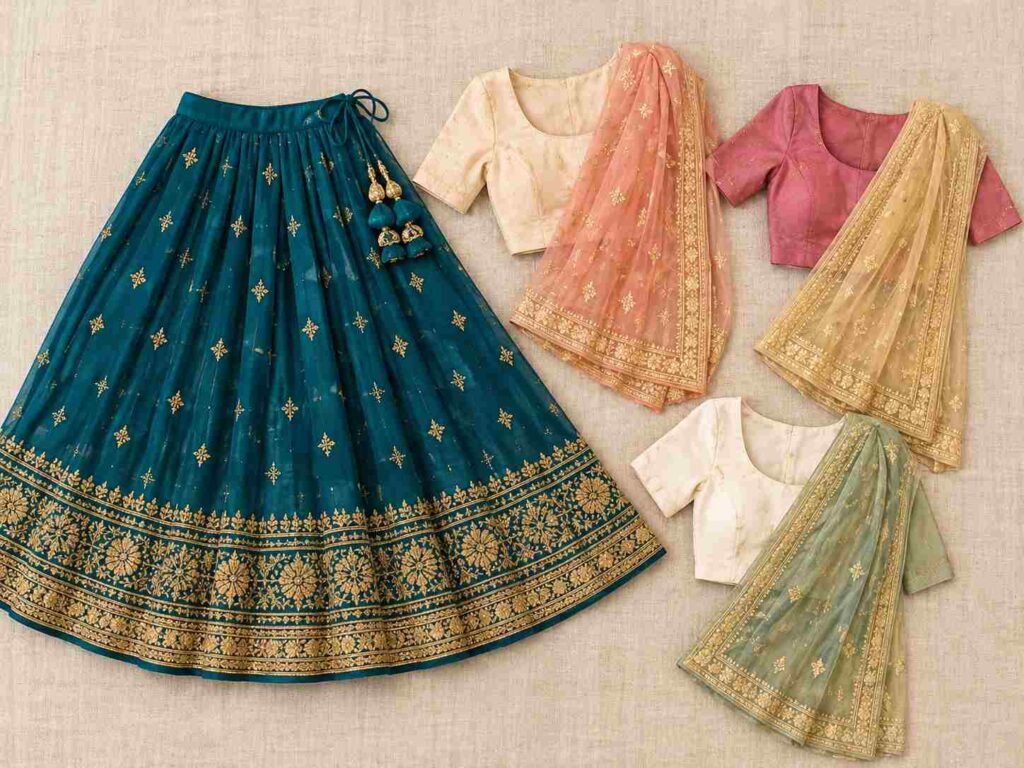
| A Navratri chaniya choli | The skirt with a plain, softer-coloured blouse and a light dupatta pinned across the body | A heavy skirt over a full day; mirror work snagging the dupatta |
| A statement choli | With a plain saree in the Gujarati drape | Bend-test the fit, especially if your size has changed |
| A bandhani dupatta | Over a solid-colour salwar kameez | Follow the fabric’s care instructions |
| A wedding saree | Re-drape in the Gujarati style with a lighter blouse | A heavy pallu: pin it |
Mirror-work and embroidered pieces need careful storage after use, as this care guide explains.
What you can still do this week
As of 3 November, Diwali is five days away.
- Full custom from scratch: not realistic. At Fashion Autograph, custom outfits are listed at 2–6 weeks, so a new custom piece is best planned for the wedding season or next year.
- Ready-to-wear: listed at 3–7 days. Stock and sizes vary, so ask about current availability first.
- Alterations: useful for fitting a piece you already own or a ready-to-wear piece you buy.
- A new blouse for a saree you own: often the quickest way to a fresh look, depending on complexity.
A realistic plan:
- Today (Tue 3 Nov): decide your three outfits and what you already own.
- By Wed 4 Nov: contact the boutique about ready-to-wear, alterations or a blouse. Alterations need the most lead time.
- Thu 5 Nov: collect pieces and do the full try-on: sit on the floor, rise, bend and walk.
- Fri 6 – Sat 7 Nov: fix, pin and iron.
- Sun 8 Nov: safety checklist before puja.
Our published price ranges start at ₹3,500 for casual kurtis and ₹5,000 for Indo-Western pieces, rising with fabric, embroidery and customisation. If you are reading this after Diwali, the same planning works for wedding season, and our Navratri planning guide lays out a timeline for next year’s festive outfits.
Want a second opinion, a blouse or an alteration?
If you are choosing between a saree and a suit, need a blouse fitted, or want to check whether a ready-to-wear piece is available in your size, contact Fashion Autograph in Ahmedabad. The boutique is at Abhilasha Complex, Manekbaug Road, and offers private appointments.
Frequently asked questions
Do I have to wear new clothes on Bestu Varas?
Wearing new clothes on New Year’s Day is described as a tradition, and how strictly it is followed varies by family. A fresh blouse or dupatta on a re-styled outfit is a reasonable way to honour it.
Can I wear a lehenga to puja?
Yes, many do. Choose a lighter skirt with a fitted blouse and a pinned dupatta so you can sit and rise easily.
Can I wear black on Diwali?
Opinions differ and I could not find an authoritative rule. Many families prefer brighter colours for puja, so ask what yours does.
Is cotton the safest fabric near diyas?
Advisories often recommend cotton and discourage synthetics, but no fabric is flameproof. A small observational study of 224 burn patients found that long, loose, flowing garments such as sarees, salwars and dupattas were involved more often than closer-fitting clothes, and that the percentage of burn was higher in synthetic wearers than cotton wearers. An observational study shows association, not cause. Pin loose ends and keep your distance from flames.
Can I get an outfit made before Diwali?
A full custom outfit usually takes weeks. Ready-to-wear pieces, alterations or a new blouse are more realistic this week.