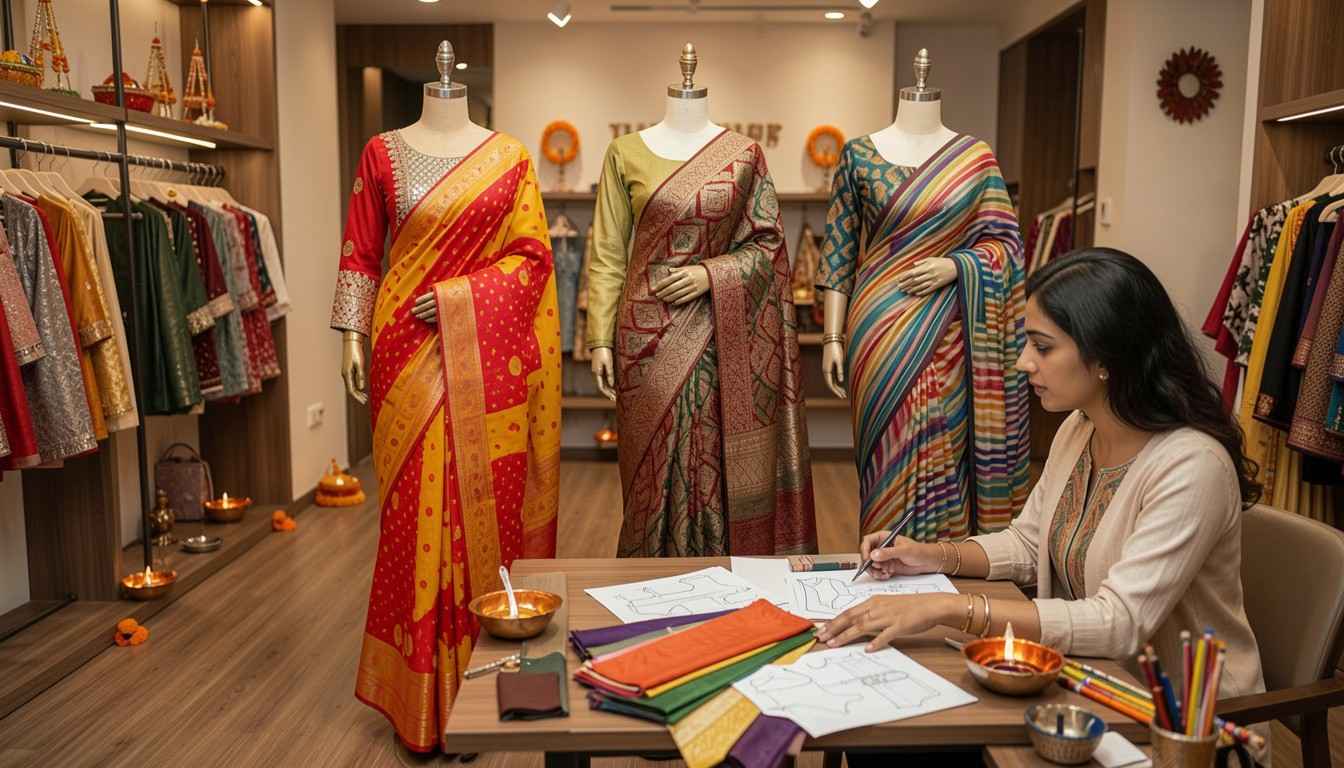
Gujarati craft has always played a strong role in Indian fashion. This year, however, you see a clear shift. Brides and festive shoppers now look closely at where the work comes from, who creates it, and how it connects to culture. As someone who values meaningful design, you want garments that feel rooted, wearable, and visually rich without excess.
At Fashion Autograph, every piece begins with this belief. Designer Naimisha Munshi works directly with regional techniques and local skills to create garments that respect tradition while fitting modern lifestyles. This report helps you understand which Gujarati artisans, motifs, fabrics, and details matter most right now and how you can wear them with confidence.
Why Gujarati Artisanship Is in Focus This Year
Gujarati artisans bring centuries of practice into today’s fashion. Their work reflects patience, community learning, and visual storytelling. You notice more designers choosing hand embroidery, mirror work, and natural dyes over factory finishes. As a result, handcrafted clothing feels personal and lasting.
This renewed interest also comes from buyers like you. You ask better questions. You care about origin, technique, and quality. Gujarati craft answers all three with honesty and depth.
Understanding Local Gujarati Artisans
Craft Passed Through Generations
Most Gujarati artisans learn their skills at home. Families teach children embroidery, weaving, and dyeing from a young age. You see this continuity in the precision of stitches and the confidence of patterns.
When you wear such work, you carry forward a story. Each motif reflects lived experience, regional belief, and seasonal rhythm.
Artisans and Women’s Occasion Wear
Gujarati craft plays a major role in bridal lehengas, chaniya cholis, dupattas, and blouses. These crafts suit celebration clothing because they hold color well, support layering, and stay visually balanced even with heavy work.
Designers who understand this use artisan techniques thoughtfully instead of crowding the garment.
Gujarati Embroidery Techniques to Watch
Kutchi Embroidery
Kutchi embroidery remains one of the most visible Gujarati crafts. You recognize it by bold thread colors, mirror accents, and strong outlines. This year, you see cleaner placements and better spacing.
Designers now use Kutchi work on panels, borders, and dupattas rather than across the full surface. This keeps the garment wearable and sharp.
Kutchi embroidery features heavily in chaniya cholis, especially for Garba and festive nights. If you enjoy movement and color, explore options from the Chaniya Choli collection in Ahmedabad that balance tradition with comfort.
Rabari Stitch Work
Rabari embroidery uses geometric shapes, thick thread lines, and contrast stitching. You often see triangles, squares, and repeating patterns. This year, designers apply Rabari work on blouse sleeves, blouse backs, and lehenga panels.
Rabari work suits structured garments. It pairs well with cotton silk, gaji silk, and matte fabrics that allow the stitches to stand out.
Aari and Zardozi Influences
Gujarat also supports fine hand embroidery such as aari and zardozi. You notice lighter thread density, detailed curves, and refined layouts. These techniques work well for bridal lehengas and designer blouses.
At Fashion Autograph, such embroidery appears in bridal pieces where balance matters more than shine. You can view examples in the Designer Bridal Lehenga Collection to understand how traditional skill meets modern placement.
Motifs Defining Gujarati Design This Year
Peacock and Bird Motifs
Peacock motifs remain popular due to their cultural meaning. This year, designers simplify their shapes. Instead of full figures, you see feathers, curved necks, and abstract forms.
These motifs appear on dupatta borders, lehenga hems, and blouse backs. They add identity without overpowering the garment.
Floral Patterns with Structure
Gujarati floral motifs differ from soft Mughal styles. They use clear outlines, bold petals, and repeat patterns. This year, florals appear in neat rows or framed sections.
Such patterns work well for festive salwar kameez and lehengas. If you prefer structured elegance, these florals suit your style.
Folk Geometry
Triangles, diamonds, and chevrons continue to influence design. These shapes reflect village art and daily objects. Designers now align them symmetrically, which gives the garment clarity.
Geometric motifs suit Indo-Western silhouettes, skirts, and cropped blouses. You can see how these elements adapt in modern cuts under Indo-Western outfits.
Fabrics Supporting Gujarati Craft
Bandhani Silk and Cotton
Bandhani remains essential in Gujarati fashion. This year, you see more controlled tie-dye patterns instead of dense clusters. Designers pair bandhani with embroidery borders for contrast.
Bandhani cotton works well for day functions. Bandhani silk suits evening wear and wedding events.
Mashru Fabric
Mashru fabric blends silk and cotton. It feels soft against the skin and holds embroidery well. You often see mashru used for blouse linings, skirts, and festive tops.
This fabric supports both hand embroidery and mirror work without stiffness.
Gaji Silk
Gaji silk remains a favorite for chaniya cholis and lehengas. It holds pleats well and supports heavy work. When you choose gaji silk, you get structure and flow together.
Color Palettes Trending This Year
Earth and Jewel Tones
You see deep reds, rust, indigo, emerald, and mustard across collections. These colors pair well with mirror work and thread embroidery.
Designers avoid neon shades and focus on depth. This makes the garment easy to rewear.
Ivory and Natural Bases
Ivory, off-white, and beige appear more often as base colors. They allow embroidery to stand out and feel lighter for long events.
Such bases work well for bridal and festive wear, especially if you prefer elegance over brightness.
Gujarati Craft in Bridal Wear
Bridal Lehengas with Regional Details
Bridal lehengas now feature artisan work in focused areas. Borders, panels, and dupattas carry the main detailing. This approach keeps the lehenga comfortable while preserving visual richness.
If you explore best bridal lehenga designs in Ahmedabad, you notice how Gujarati motifs blend with bridal needs.
Designer Blouses with Hand Work
Blouses have become key carriers of artisan detail. You see mirror work sleeves, Rabari stitch backs, and hand embroidery necklines.
For inspiration, browse designs from the Designer Blouse Boutique in Ahmedabad to understand how blouse design supports heritage craft.
Festive and Garba Wear Influence
Gujarati craft remains central to Garba dressing. Chaniya cholis continue to reflect folk identity through color, mirror work, and movement.
This year, designers focus on lighter skirts, breathable fabrics, and balanced embroidery. You stay comfortable during long nights without losing style.
You can also explore the roots of this tradition through The history and tradition of Chaniya Cholis in Gujarat to appreciate how today’s designs evolved.
How Designers Adapt Gujarati Art Today
Designers now respect spacing and proportion. They avoid filling every inch with work. Instead, they let motifs breathe.
At Fashion Autograph, Naimisha Munshi personally oversees design development. She ensures that artisan techniques align with the client’s body type, event needs, and comfort. Each garment reflects intent, not excess.
You can view real examples of this approach in the Work Gallery.
What You Should Look for When Buying Artisanal Wear
Stitch Quality
Check if stitches sit flat and feel secure. Hand embroidery should look consistent, even if slight variations exist.
Fabric Strength
Good artisan work needs strong fabric support. Ask about lining and base fabric.
Wear Value
Choose designs that allow reuse. Borders, detachable dupattas, and statement blouses help you style the garment again.
Supporting Local Artisans Through Your Choices
When you choose garments with genuine artisan work, you support skill survival. You help communities continue their craft and pass it forward.
Fashion Autograph works directly within Gujarat to keep these skills alive. The focus stays on respect, fair value, and long-term relationships.
If you want to discuss designs that reflect this philosophy, you can connect through the Contact page.
Why Gujarati Motifs Will Stay Relevant
Gujarati motifs stay relevant because they adapt without losing identity. They suit weddings, festivals, and modern events alike.
As a buyer, you gain garments that feel grounded and expressive. You wear culture with ease, confidence, and pride.
When design honors its roots, it never feels outdated. That belief guides every piece created under the Fashion Autograph label.