
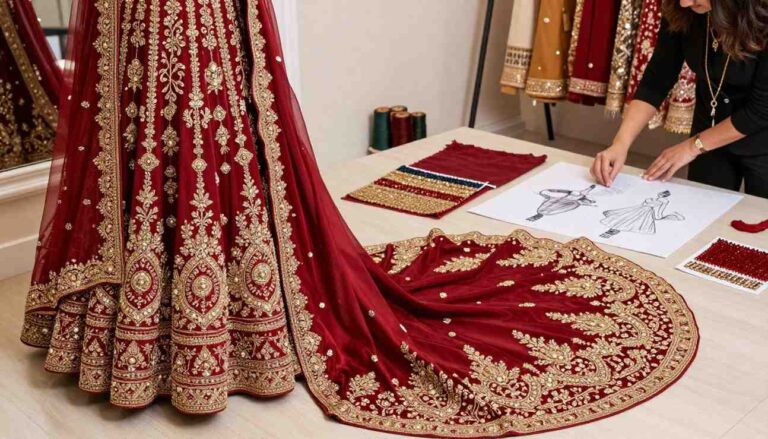
You have probably asked this question at least once. Why does one bridal lehenga cost significantly more than another? Why does the price jump when you switch fabric or embroidery style? And how do you know whether the cost reflects quality or brand positioning?
If you are planning your wedding, you deserve clarity before you invest.
At Fashion Autograph, every bridal lehenga is designed by Naimisha Munshi herself. The boutique operates exclusively under its own label and does not retail any external brands. You work directly with the designer. Your measurements, your event details, and your expectations shape the final garment.
In this detailed bridal lehenga price breakdown, you will understand what actually changes the cost and how you can plan your bridal budget with confidence.
How Much Does a Bridal Lehenga Cost in 2026?
The cost of a bridal lehenga in 2026 depends on fabric quality, embroidery intensity, designer involvement, and customization level.
In general, you will see three broad categories:
- Entry-level designer lehengas
- Mid-range custom bridal lehengas
- High-end couture bridal lehengas
A ready-made lehenga from a multi-brand store will usually cost less than a fully customized design. However, you must compare structure, embroidery hours, and fabric quality before you judge value.
If you want to understand how custom design works before discussing price, read what to expect in our custom bridal lehenga process. That article explains how each stage adds time and craftsmanship.
The 7 Main Factors That Change Bridal Lehenga Cost
Let us break this down clearly. Every bridal lehenga price depends on specific cost drivers. Once you understand them, you will read invoices with confidence.
Fabric Type and Fabric Quality
Fabric is the base of your lehenga. It affects fall, weight, structure, and long-term durability.
Common bridal fabrics include:
- Raw silk
- Banarasi silk
- Velvet
- Organza
- Net
- Georgette
Silk costs more than synthetic blends because it offers better structure and longevity. Velvet increases cost because of weight and finishing. Pure organza sourced from premium mills also raises pricing.
At Fashion Autograph, fabric sourcing is part of the design process. You can learn more about this in From Sketch to Studio: How We Source Fabrics for High-End Embroidery.
Better fabric means higher raw material cost. The base price starts here.
Embroidery Type and Handwork Intensity
Embroidery is one of the biggest price drivers.
Hand embroidery costs more than machine embroidery. The reason is simple. Skilled artisans invest hours into detailing.
Common bridal embroidery techniques include:
- Zardosi
- Resham thread work
- Mirror work
- Cutdana
- Sequins
- Beadwork
If you want to understand when each technique works best, read Mixing Handcrafts: When to Use Zardosi, Mirror Work, or Resham Embroidery.
The cost increases based on:
- Number of artisan hours
- Density of embroidery
- Thread quality
- Gold or metallic element usage
Heavy border work plus scattered motifs across the skirt can double labor time. That directly impacts price.
Custom Design vs Ready-Made Lehenga
A ready-made lehenga follows a fixed pattern. A custom bridal lehenga follows your exact measurements and vision.
Custom design includes:
- Personal consultation with Naimisha Munshi
- Sketch development
- Pattern drafting
- Multiple fittings
- Adjustments
You can explore why custom bridal lehenga designs are worth the investment to understand the long-term value of personalization.
Because custom work involves individual attention and structured fittings, the labor cost increases. However, you receive fit accuracy and exclusivity in return.
Blouse Construction and Structure
Many brides focus only on the skirt. However, the blouse can significantly increase the total cost.
Blouse cost depends on:
- Neckline complexity
- Back design detailing
- Corset structure
- Built-in support
- Hand embroidery density
If you are exploring modern neckline options, review how to choose the perfect neckline for designer blouses.
If you want bold back detailing, see the best back designs for designer blouses.
Structured blouses require additional lining, boning, and stitching precision. That increases both material and labor cost.
Dupatta Work and Layering
A single dupatta costs less than a double dupatta setup. The moment you add a second veil-style dupatta, the embroidery and finishing costs increase.
Dupatta pricing depends on:
- Border width
- Handwork detailing
- Scalloped edge finishing
- Fabric type
If you want styling guidance, read how to choose bridal jewellery to complement heavy embroidery because jewellery selection often influences dupatta detailing decisions.
More embroidery equals more artisan hours. That increases cost.
Designer Involvement and Brand Positioning
You are not only paying for fabric and embroidery. You are also paying for design supervision.
At Fashion Autograph, Naimisha Munshi is the sole designer. She personally oversees:
- Fabric selection
- Embroidery placement
- Fitting sessions
- Final finishing
If you want to understand what sets this label apart, read what makes our designer bridal lehenga unique.
A designer-led boutique with limited production capacity prices differently from mass production retailers. The value comes from exclusivity and personal involvement.
Timeline and Urgency
If you place a rush order, expect additional cost.
Why?
- Artisans work overtime
- Production scheduling changes
- Priority handling increases labor charges
That is why early planning matters. You can review the recommended schedule in Bridal Lehenga Timeline: When to Start for a 2026 Wedding.
When you plan ahead, you avoid rush fees.
Hidden Costs Brides Often Overlook
Many brides focus only on the lehenga base price. However, additional components may increase your final bill.
Hidden costs may include:
- Extra can-can layers
- Additional embroidery upgrades
- Alterations after final fitting
- Custom packaging
- Travel preparation
If you are concerned about post-fitting changes, read Alterations 101: What Changes Are Reasonable After Your Final Fitting.
If you plan a destination ceremony, see Destination Wedding Packing: How to Travel with a Bridal Lehenga Safely.
Clarity prevents surprises.
Why Custom Bridal Lehengas Cost More Than Retail Pieces
Let us compare clearly.
A retail lehenga is produced in bulk sizes. A custom bridal lehenga is drafted according to your body measurements.
Custom production involves:
- Individual pattern cutting
- Controlled embroidery placement
- Two to three fittings
- Direct designer supervision
If you are exploring personalization benefits, read how custom bridal lehenga can reflect your personality.
Custom garments also reduce fit issues. You can further understand measurement importance in how to ensure a perfect fit for your custom bridal lehenga.
When labor and exclusivity increase, cost increases.
How to Plan Your Bridal Lehenga Budget Smartly
You do not need the most expensive option. You need the right option for your priorities.
Define Your Non-Negotiables
Ask yourself:
- Do you want heavy hand embroidery?
- Is silk essential?
- Do you prefer a double dupatta?
If you need structured guidance, read how to choose the perfect bridal lehenga for your wedding day.
Identify Where You Can Adjust
You can control cost by:
- Reducing embroidery density
- Choosing a lighter dupatta
- Selecting simpler blouse detailing
If you want cost-saving strategies, explore Bride on a Budget: Smart Ways to Cut Costs on a Custom Bridal Lehenga.
Budget planning becomes easier when you understand each component.
Is an Expensive Bridal Lehenga Worth It?
The answer depends on what you value.
An expensive bridal lehenga often offers:
- Higher embroidery precision
- Better fabric durability
- Superior fit
- Longer garment life
You may also value photography results. For visual planning, read how to photograph your bridal lehenga: poses, lighting, and angles.
If you care about heirloom potential, premium craftsmanship may justify the cost.
How Fashion Autograph Approaches Bridal Lehenga Pricing
At Fashion Autograph, pricing reflects:
- Fabric quality
- Artisan labor hours
- Blouse structure
- Dupatta detailing
- Direct involvement of Naimisha Munshi
You can browse the designer bridal lehenga collection in Ahmedabad to see real examples of craftsmanship.
If you want to evaluate quality in person, visit the Fashion Autograph work gallery for finished bridal pieces.
Every garment is created under the Fashion Autograph label. The boutique does not stock external brands. Your lehenga is designed exclusively for you.
Frequently Asked Questions About Bridal Lehenga Cost
Why is hand embroidery expensive?
Because skilled artisans spend many hours stitching each detail manually.
Does double dupatta increase price significantly?
Yes. It adds fabric and embroidery labor.
Can I reduce cost without affecting overall look?
Yes. You can reduce embroidery density or simplify blouse structure.
Is silk more expensive than net?
Usually yes. Pure silk costs more due to quality and durability.
How early should I start planning to avoid rush cost?
Start at least 9 to 12 months before your wedding.
Final Thoughts
When you understand what changes the cost of a bridal lehenga, you make better decisions. Fabric quality, embroidery intensity, blouse construction, customization level, and timeline all influence pricing.
If you are planning your wedding in Ahmedabad and want direct designer involvement, you can connect with Fashion Autograph and book a consultation with Naimisha Munshi through the contact page.
Your bridal lehenga is an investment. Once you understand the price breakdown, you can invest with clarity and confidence.


